The 7 elements of Interior Design

The 7 elements of Interior Design

The 7 Elements of Interior Design

Interior design is both an art and a science, aimed at enhancing the interior of a space to achieve a healthier and more aesthetically pleasing environment. At the heart of good interior design lie seven essential elements: space, form, line, light, colour, pattern, and texture.

We decided to take a moment to reflect on them, because understanding and balancing these elements is truly the key to creating a beautiful and functional space. And because we love a bit of history, we chose an architect or designer for each element who has been a real inspiration in the field.

By the end, you’ll have a clear understanding of these interior design basics and how to apply them to create a balanced, functional, and beautiful space!

1. space in interior design (area)

Space refers to the physical boundaries of a room, length, width, and height and is the canvas on which all other elements are applied. It’s divided into positive space (where objects are placed) and negative space (the empty areas around and between those objects). A harmonious design maintains a thoughtful balance between the two.

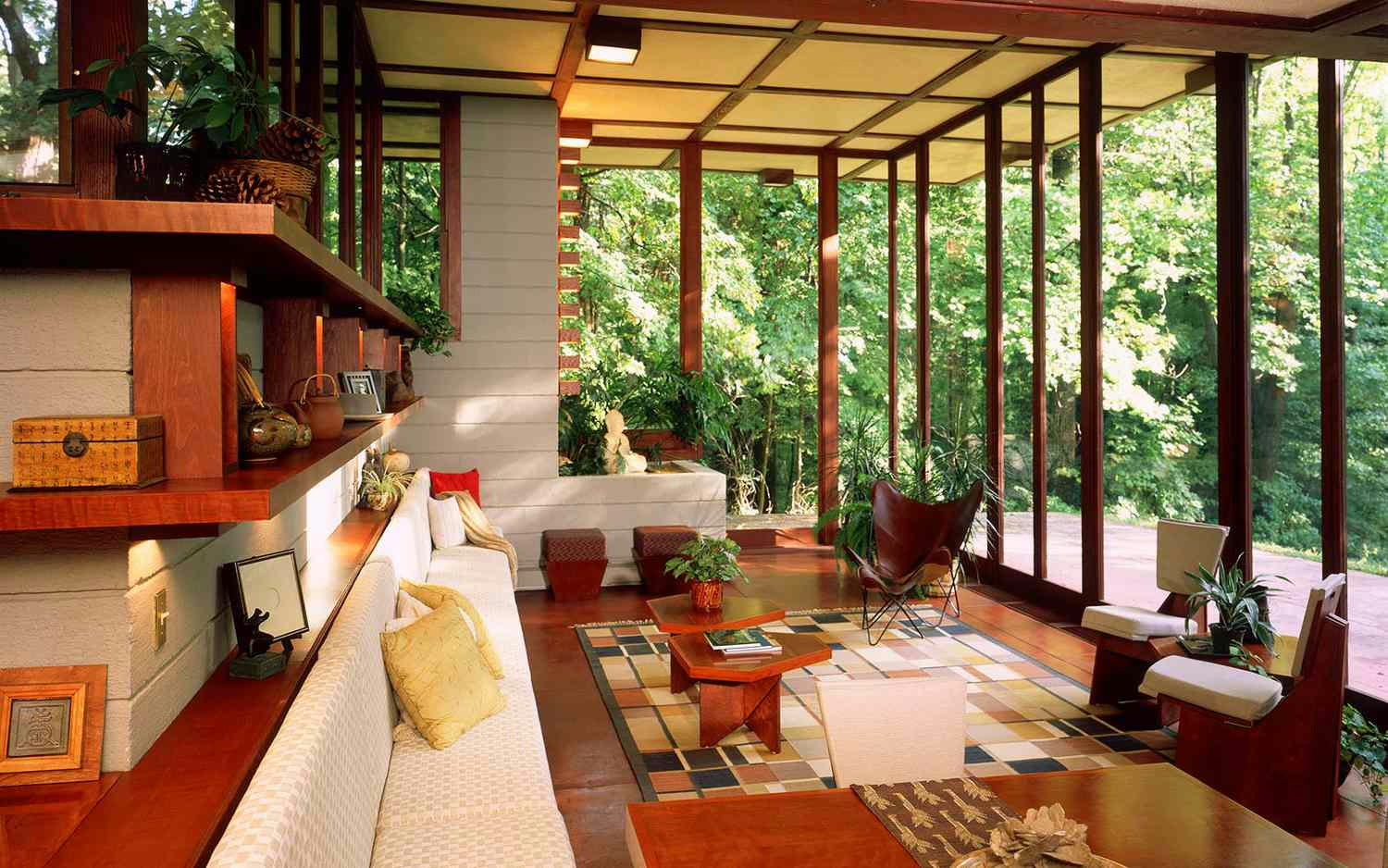
Design reference: Frank Lloyd Wright is an example of masterful use of space, with open-plan layouts that created seamless flow between rooms.

design reference: Frank Lloyd Wright

2. form in interior design (shape)

Form refers to the shape of a room as well as the objects within it. It can be geometric or organic and, when used thoughtfully, it brings structure and balance. A well-composed room uses repeated forms to create visual harmony while mixing shapes sparingly to add interest without chaos.

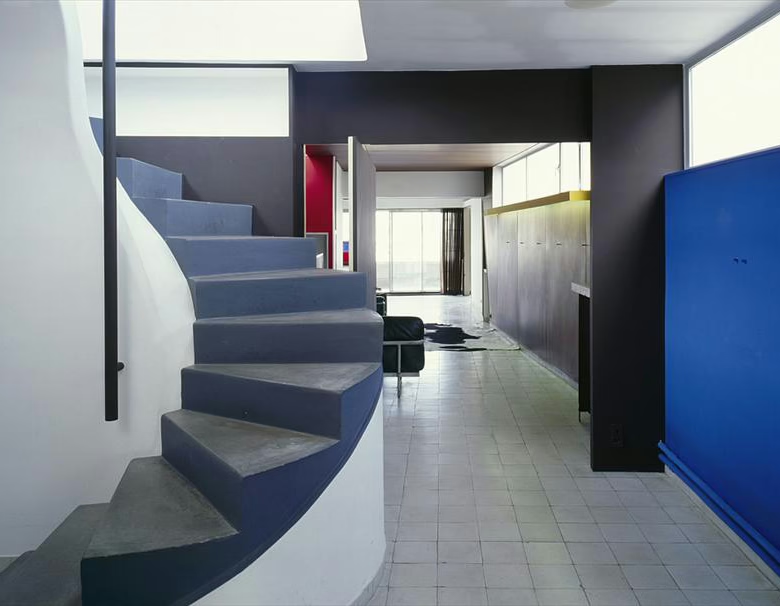
Design reference: One of the pioneers of modern architecture, and an absolute favourite of ours, Le Corbusier is a great example of embracing clean geometric forms, believing that form should always follow function.

design reference: Le Corbusier

3. line in interior design (direction)

Lines guide the eye and define shapes and forms. They can be horizontal (creating a sense of stability), vertical (adding height), or dynamic/diagonal (suggesting movement and energy). Lines are evident in architectural details, furnishings, and even the silhouette of objects in a room.

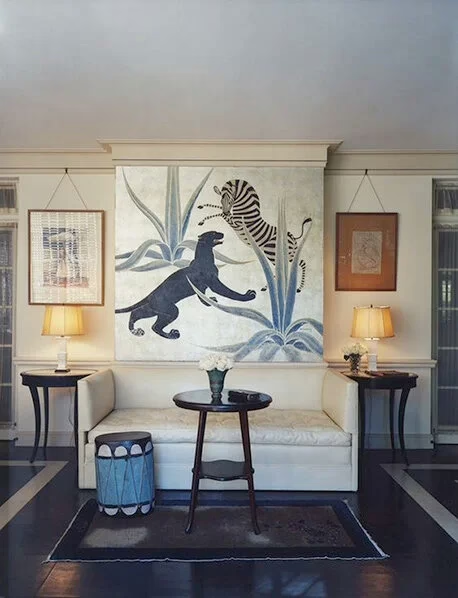
Design reference: Elsie de Wolfe, often credited as America’s first professional interior decorator, broke away from the heavy Victorian style to use clean lines and symmetry, bringing a light, airy feel to her rooms.

design reference: Elsie de Wolfe

4. light in interior design (mood)

Light, both natural and artificial, is critical in interior design. It affects how we perceive colours, forms, and spaces, and it influences much of the mood. Well-lit rooms feel open and welcoming, while dim lighting can evoke intimacy or drama. How do you design lighting in a space? By layering it, using a mix of ambient (general), task (functional), and accent (decorative) lighting. The interplay of light and shadow can dramatically alter the mood of a space.

Design reference: Jean-Michel Frank, known for his minimalist interiors in the 1920s and ’30s, often emphasised the importance of natural light, using pale tones and reflective materials to enhance brightness.

design reference: Jean-Michel Frank

5. colour in interior design (emotion)

Colour sets the emotional tone of a room. Warm tones (reds, oranges, yellows) are stimulating and cosy, while cool tones (blues, greens) evoke calm and serenity. Colours are not just for decor, they can be used to define zones in open spaces or to create focal points. A well-designed colour palette brings unity and rhythm to an interior and can link to nature, art, or cultural influences.

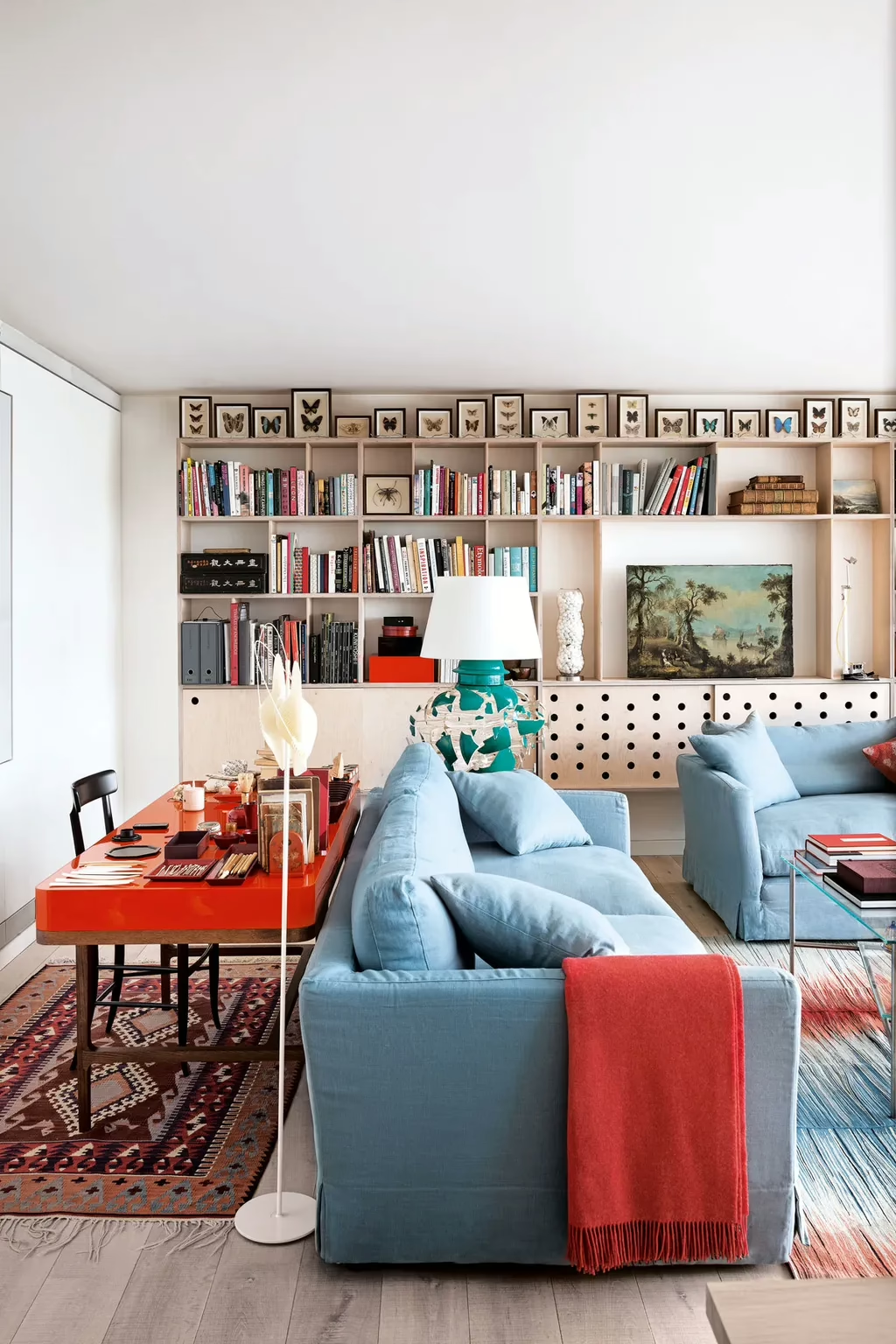
Design reference: British designer Terence Conran championed modern living with vibrant colour schemes that reflected post-war optimism. He believed colour was key to energising a home.

design reference: Terence Conran

6. pattern in interior design (rhythm)

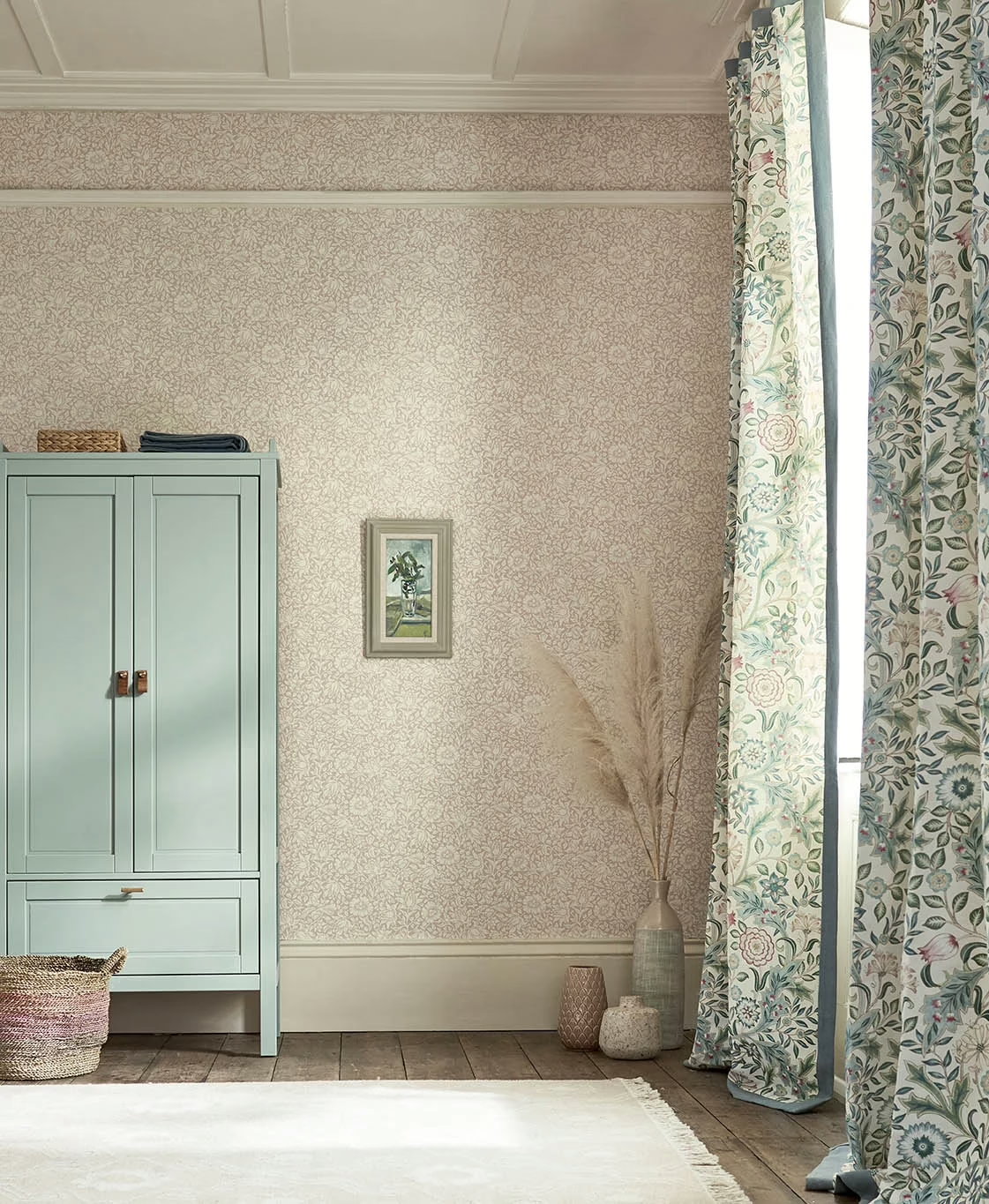
Patterns are the elements that create rhythm—they bring energy, movement, and life to a space. They appear everywhere, from wallpaper to fabrics, rugs, and accessories. The key is balance: there’s no right or wrong pattern, but it’s important to mix patterns of different scales and styles while maintaining a unifying colour palette.

Design reference: William Morris, a central figure in the Arts and Crafts movement, was a master of pattern. His richly detailed wallpaper and textile designs emphasised nature-inspired motifs, craftsmanship, and harmony.

design reference: William Morris

7. texture in interior design (sensory)

Texture refers to the surface quality of materials, how they feel and how they look like they might feel. Combining different textures (smooth, rough, soft, hard) adds depth and tactile interest to a room. A room with a single texture can feel flat; layering textures creates richness, especially in monochromatic designs.

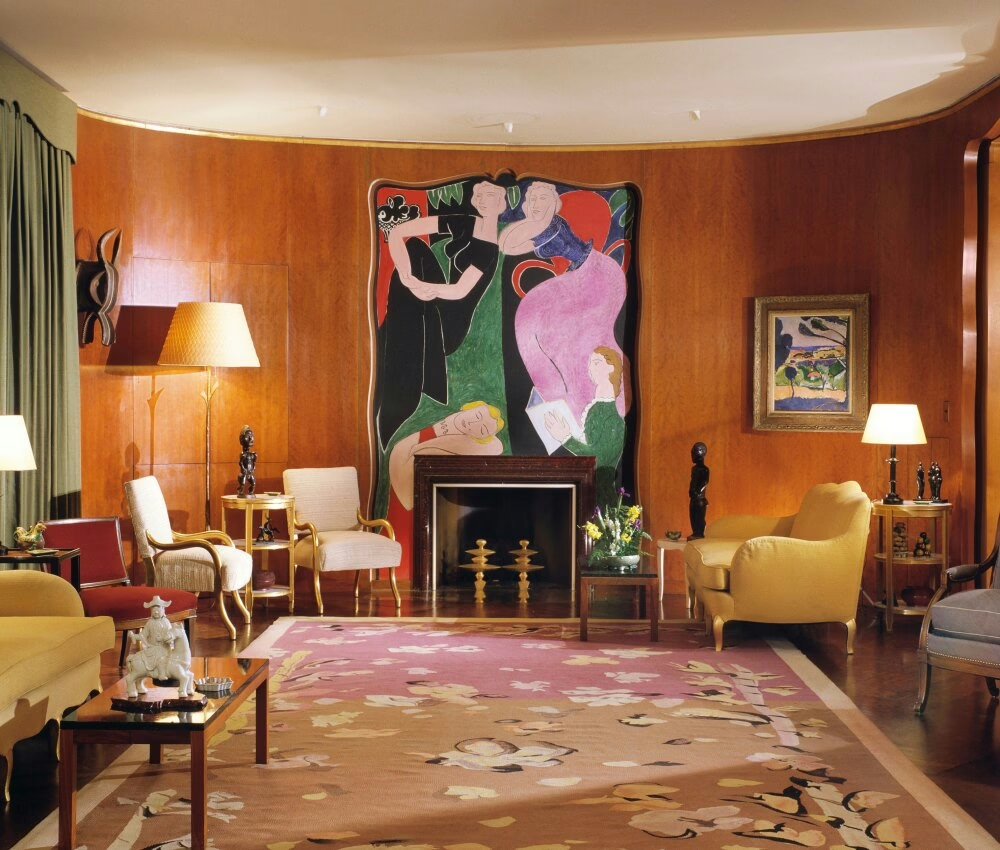
Design reference: Dorothy Draper, known for her bold, theatrical interiors in the early 20th century, expertly used texture through lacquered furniture, plush upholstery, and ornate mouldings to create dramatic contrast and personality.

design reference: Dorothy Draper

Great interior design doesn’t happen by accident. It results from a deliberate balance of these seven core elements which, when skillfully integrated, can transform any space into one that feels cohesive, functional, and uniquely personal. The best interiors are not just visually appealing, they are also emotionally resonant and deeply human. Want to start applying these principles in your own home? Begin by observing how each of these elements currently exists in your space, then adjust one at a time. The goal is not perfection, but harmony!

Drop us an email if you’d like to discuss a project.

How to create illusions with colours

How to create illusions with colours

How to create illusions with colours

Ever heard of trompe-l’œil? It means “deceive the eye” in French. This artistic technique is designed to capture realistic three-dimensional objects or scenes on a flat, two-dimensional surface.

Used for centuries, trompe-l’œil remains a powerful tool in modern interior design. When applied thoughtfully, it can transform ordinary rooms into immersive visual experiences — turning plain walls into something far more dimensional and engaging.

And while you might associate it with intricate mural painting, colour is actually one of the most accessible and effective ways to introduce this technique into your space.

How? Through the strategic use of light and shadow, contrast, and tonal variation, you can create depth, simulate texture, or suggest architectural features — even when none exist. So, let’s set aside the flat feature wall for a moment and explore something a little more imaginative.

shadows and highlights

By applying darker and lighter shades of the same colour, you can suggest recesses and protrusions — such as faux panelling, columns, or even windows. A painted archway with a subtle inner gradient can appear convincingly real when executed with well-blended tones.

photo credit Pinterest

cool vs warm tones

Cool colours like soft blues and greys tend to recede, while warm tones such as ochres and terracottas come forward. By applying this principle, you can make a flat wall appear to have niches or alcoves simply by “pushing” and “pulling” areas with contrasting temperature tones.

photo 01 & 02 Pinterest

simulating materials

Want the look of marble, brick, or stone without the cost? Trompe-l’œil painting techniques — using layered colour washes and subtle veining — can convincingly replicate these textures. Pair with satin or matte finishes to enhance surface realism.

photo 01 Eva Ferrari Restauri
photo 02 Contemporary Industrial Bookshelf by Nam for Stylish Home Storage
If you are wondering where you can use this technique, the answer is basically everywhere:

Ceilings

Paint a skylight, beams, or even clouds to open up a low room.

Walls

In smaller homes, trompe-l’œil is one of the best space-saving visual tricks. For example, to create the illusion of height, paint picture rails in a brighter, bolder colour than the wall. No picture rails? Just fake them — that’s what trompe-l’œil is all about.

Doors and cabinets

Add depth with painted shadows or whimsical designs like bookshelves or hidden passageways.

Hallways

Elongate or widen narrow spaces by using perspective lines and colour fades.

A few basic rules to keep in mind:

Use matte finishes

Glossy paints can ruin the illusion by catching light inconsistently.

Test in natural light

Shadows and illusions shift with the day. Always sample your effect under the room’s real lighting conditions.

Basic science of colour

Dark colours advance, whereas pale colours recede. If you want to make the beading on that bedside table pop, use warmer tones to make it advance. Cooler shades, on the other hand, should be reserved for making something recede, such as the outlines on that recessed wardrobe panelling. Darker cool tones are especially useful for adding depth to alcove shelving.

Whether you’re looking to bring an authentic feel to a historic house or add texture to a more modern home, trompe-l’œil is a brilliant ‘trick of the eye’ technique for creating head-turning, impactful spaces. If you’re thinking about decorating a little differently and bringing a new dimension to your interior design, this might be the perfect moment to try something new!

Drop us an email if you’d like to discuss a project.

Creating proportional spaces using the best Interior design rules

Creating proportional spaces using the best Interior design rules

Creating proportional spaces using the best
Interior Design rules

One of the key elements for creating balanced and visually appealing spaces is to understand scale and proportion. This includes factors such as space distribution, furniture placement, colour distribution, and decor. We’re talking about the 70/30 rule or the 80/20 rule, which are easy interior design tips to implement. When done correctly, they can have transformative effects.

How does it work? Here are some insights we’ve learned along the way to help you get started!

livingroom@pierre_augustin_rose

The importance of scale and proportion

First thing first, the theory. 

Scale refers to how objects relate to the size of the room. A large sofa in a small living room can feel overwhelming, while small furniture may look out of place. 

Proportion is the relationship between different elements in a space. The golden ratio 1:1.618 (known as the Fibonacci sequence) is a widely used principle that ensures visual balance. For example, pairing large furniture with appropriately scaled décor and varying heights, it’s a way to create depth and interest.

The 70/30 rule in Interior Design

The 70/30 rule suggests that 70% of a space should follow a dominant style, colour, or material, while the remaining 30% introduces contrast. This simple formula prevents monotony and enhances visual interest. How can it be applied?

colour scheme

Use a dominant colour for 70% of the space and accent with another shade for the remaining 30%.

furniture & décor

Choose foundational pieces (sofas, beds, etc.) in a cohesive style for 70% of the space, then add contrast with 30% through statement elements like chairs or artwork.

textures & materials

Blend 70% of the room with consistent materials (wood, metal, fabric), and for the remaining 30%, introduce complementary textures to add depth.

the rule of thirds

Divide the space into three sections to guide furniture placement and art arrangements, ensuring balance.

negative space

Allow breathing room between objects to prevent a cluttered look.

The 20/80 rule in Interior Design

The 20/80 rule is another guideline for achieving balance. It suggests that 20% of the space should feature bold, statement-making elements, while the remaining 80% should maintain a more neutral or with an understated approach. This creates focus and visual impact without overwhelming the space. How can it be applied?

colour scheme

Consider using neutral tones for 80% of the room and introducing bold, statement colors or decor pieces for the remaining 20% to create focal points.

furniture & décor

Use 80% of the materials in neutral, timeless finishes, and incorporate 20% with bold or unconventional textures to make the design stand out. For example, in a kitchen, this could mean using 80% neutral cabinets with 20% accent kitchen backsplash or countertop in a bold colour.

textures & materials

Blend 70% of the room with consistent materials (wood, metal, fabric), and for the remaining 30%, introduce complementary textures to add depth.

the rule of thirds

Apply the 20/80 rule by making 20% of the space a striking focal point, like a dramatic piece of art or a bold furniture choice, while the rest remains more balanced.

negative space

80% of the space should remain clean and open, while 20% can be filled with objects or features that create a sense of emphasis or interest.

Why do these principles work?

Combining scale, proportion, and one of the two rules creates spaces that feel intentional, functional, and visually engaging. Mastering these fundamentals will help you design interiors that are both dynamic and cohesive.

If you seek professional help to achieve the right balance in your space, our Interior Power Hour will guide you in refining the best layout, décor, and textures to create a harmonious and well-proportioned design.

bedroom@studio_haddou_dufourcq

kitchen@arentpykestudio

hallway@tash_lickcolour

Mastering small bathroom design

Mastering small bathroom design

Mastering small bathroom design

We do love a massive bathroom! Probably everyone does. But, particularly in London, we often work with small spaces and it can feel like solving a challenging puzzle. With limited space, every design choice must balance functionality and aesthetics. So we decided to put on “paper” a few tips and tricks on useful practices for designing a small bathroom, along with practical examples to inspire your next renovation.

@arentpykestudio

@barlowandbarlow

optimize the layout

First of all, a small bathroom needs an efficient and cleverly designed layout to maximise utility, so when placing the toilet, sink, and shower, it’s important to think strategically to minimise wasted space. We usually opt for a wall-mounted toilet or sink to free up floor space: a more visible floor will give a greater sense of space. Also, choose sliding or pocket doors instead of traditional swing doors.

Example: Think linear, if the room is narrow, stacking all the elements on one wall reduces costs and enhances space efficiency.

choose the right fixtures and fittings

When choosing fixtures, selecting compact or multifunctional items tailored for small spaces is the best approach. This includes opting for a vanity with built-in storage but also using rounded edges, where possible, to prevent bumps in tight quarters.

Example: create a walk-in shower with a frameless glass door instead of a bathtub, this will make the space feel bigger and will allow you to get away with a slightly smaller shower width.

light up

If possible, adding a skylight or increasing the window size, will help to create a feeling of space. Incorporating layered lighting such as overhead lights, wall sconces, and recessed lighting is also a great way to enhance the space.

And for the windows? We tend to maximize natural light by keeping windows uncovered or using light and simple window dressing.

storage solutions

Every bathroom needs some sort of storage, even if it’s a tiny one, and when the room is small, it can feel quite overpowering. One solution is to think vertically and incorporate smart storage like floating shelves or tall cabinets. How about integrating recessed shelves in the shower or above the toilet? Or use hooks or rails for towels and robes instead of bulky towel bars?

Example: A built-in cabinet with a mirrored front provides storage and the mirror will enlarge the perception of the space.

flooring and walls

Does the bathroom have a high ceiling? Bringing the tiles all the way up is a nice way to enhance the space. Also carrying the same floor times into the shower is a good solution to have a floor space that looks bigger.

Colour-wise, the most common advice is to go light, using a neutral palette, but we like a bit of colour and texture and think they both can add lots of value. But how? We usually go for a contrast between the floor and the walls: dark and light or bold and simple.

@laadstudio_

@laadstudio_

Despite the challenge, designing a small bathroom is an opportunity to get creative with space and style and think outside the box. By focusing on efficient layouts, thoughtful fixture choices, and clever design elements, even the smallest bathroom can be transformed into a beautiful and functional sanctuary!

@meghan.eisenberg

@starlingarchitecture

@interior105_design

Renovation in Clapham Common

Renovation in Clapham Common

Renovation in Clapham Common

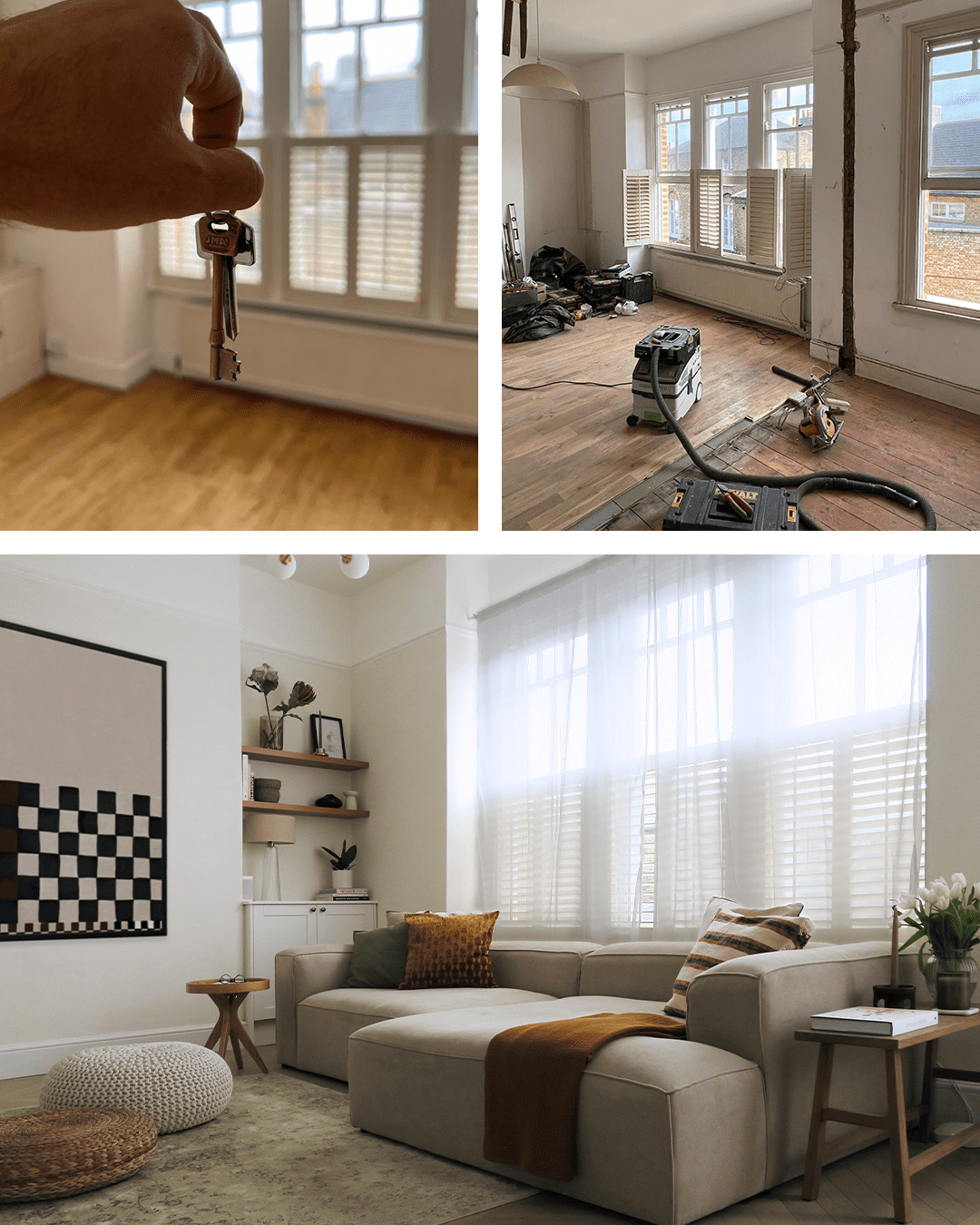
The North Street apartment is nestled in the heart of Clapham Common, in an area full of character and a strong community vibe. The maisonette flat is located on the first floor and originally consisted of three bedrooms, a compact living area, a large kitchen, and a very small bathroom.

Our client wanted to transform the space by reconfiguring it to suit their lifestyle while ensuring it would be appealing and practical for a future buyer. They wanted something stylish and high-quality but without sacrificing the functionality needed for everyday living.

Scope of Work

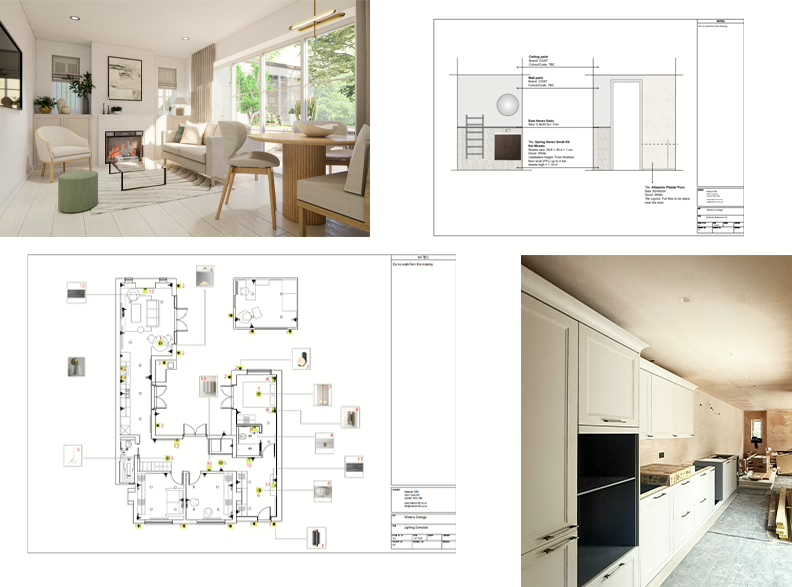
The work on site took roughly 4 months and involved a complete renovation, including the demolition and refurbishment of all rooms within the property. The scope of work covered every aspect, from flooring and wall treatments to the kitchen, bathrooms, and joinery design, as well as lighting and furniture selections.

Space Design

The main consideration in designing this flat was how to re-organise the space to better serve the client’s daily needs. To achieve this, we opened up the living room by removing the wall between it and the adjacent studio, creating a spacious and light-filled reception room, leaving also space for a future loft conversion. By removing the door that separated it from the hallway, we allowed natural light to flow throughout the flat, enhancing the sense of space.

We also reduced the length of the kitchen to carve out extra space for an enlarged bathroom. The old hallway storage was completely demolished and replaced with a floor-to-ceiling, four-door custom cabinet, serving multiple purposes.

Materials

One key feature was the beautiful new wooden flooring, laid in a herringbone pattern throughout the entire apartment. This set the tone for the stylish and atmospheric design. We used warm oak for the flooring, and touches of oak were repeated throughout the scheme, from the kitchen to the custom shelving in the bedrooms.

For the bathroom, we chose Claybrook tiles for both the floors and walls, incorporating three different textures and cuts to create a sense of zoning. The warm, neutral tones enhance the feeling of spaciousness, and the brass fixtures further elevate the overall aesthetic